
Wholesale buyers, retail brand teams, and OEM program managers often receive polished showroom samples long before they understand the Christmas ornament manufacturing process that produced them. The gap shows up at the worst moment: when coating on bulk lots no longer matches the pilot your merchandising team approved, when cap torque fails at distribution-center receiving, or when export cartons crush fragile inner packs because packaging was treated as an afterthought. Knowing how Christmas ornaments are made—from design lock through FOB release—helps you scope realistic sampling windows, ask sharper factory questions, and align production with US and European retail expectations. wholesale product catalog · OEM development process · contact Shuanglin Crafts
This guide walks through six documented steps at a ball-native Christmas ornament factory: design and sampling, material preparation, hand painting and decoration, electroplating and glitter, quality inspection, and packaging for export. It is written for B2B importers sourcing custom Christmas ornaments, glass Christmas ornaments manufacturer programs, and OEM Christmas ornaments—not for craft hobbyists. Each step includes what wholesale buyers should verify before bulk authorization opens.
Shuanglin Crafts runs glass heroes, shatterproof resin volume walls, luxury gift sets, and private-label retail boxes under one export desk in Zhejiang, China. Use this walkthrough alongside our wholesale product catalog, OEM development path, and contact page when you build vendor scorecards for your next seasonal allocation.
Step 1 — Design & Sampling
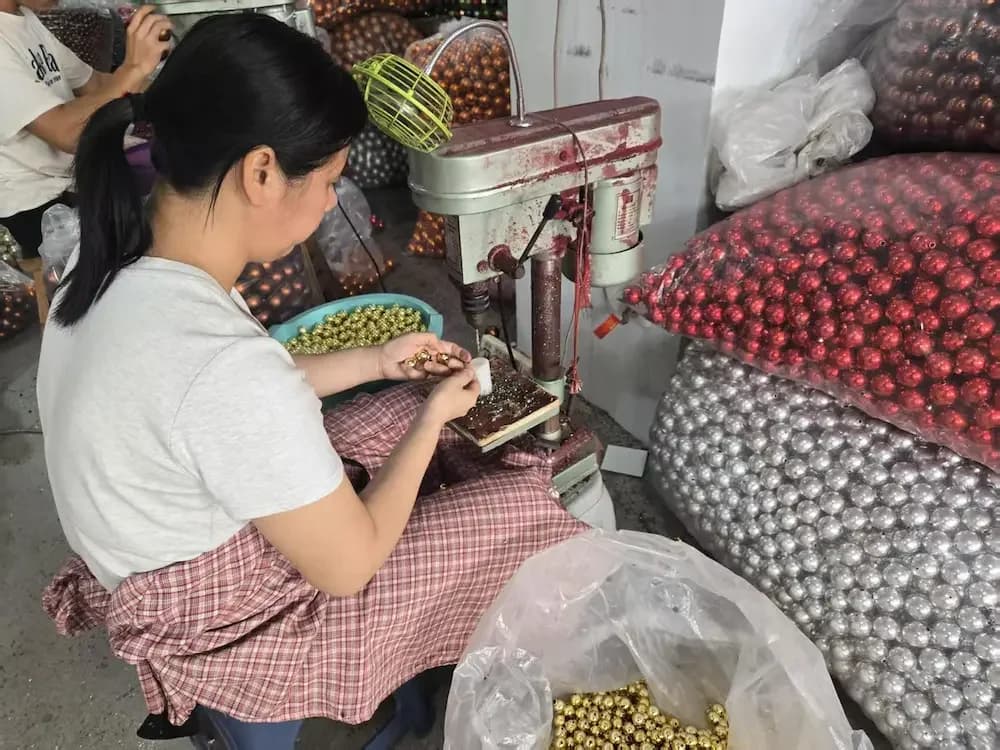
Every serious Christmas ornament manufacturing process starts with a brief—not a catalog color swap. Design and sampling translate your brand ladder, finish families, cap metallization, and packaging tier into strike samples the factory can reproduce at bulk. OEM Christmas ornaments require Pantone references, dimensional masters for custom caps, and retail dielines when gift boxes carry your logo. ODM paths customize approved ball platforms when you need faster pilots without new molds on every SKU—but even ODM programs need signed finish boards before coating bays commit pigment sources. OEM development process · custom Christmas ornaments · Christmas ornament manufacturing process
Sampling gates protect margin. Pilot lots run on production-intent inner packs, not showroom spheres with generic hang points. Strike samples compare masters under controlled lighting—typically D65-equivalent review—so merchandising approves what bulk will deliver, not what photography retouching can rescue. New tooling typically needs ninety to one hundred twenty days to first vessel; repeat platforms on approved molds may ship in forty-five to sixty days after master approval. Your Christmas ornament factory should quote tooling MOQ, revision windows, and pilot scope honestly at RFQ—not after creative locks planograms.
Archive discipline separates factory-direct partners from traders. Approved finish masters, cap torque records, and inner-pack photos should be stored for repeat seasons so year-two SKUs restart without full re-qualification. Brands launching custom Christmas ornaments for the first time should confirm the factory has run private-label architecture before—not only stock color changes on existing molds.
What to verify at the sampling gate
- Signed finish board covering interior wash, exterior coat, cap metallization, and hand-finish steps
- Strike samples on production-intent inner packs—not generic egg-crate placeholders
- Tooling ownership terms for custom caps, molds, and proprietary hang hardware
- Revision window and calendar from approved masters to bulk coating authorization
- Packaging dieline approval when retail boxes or PDQ shippers are part of the brief
Step 2 — Material Preparation
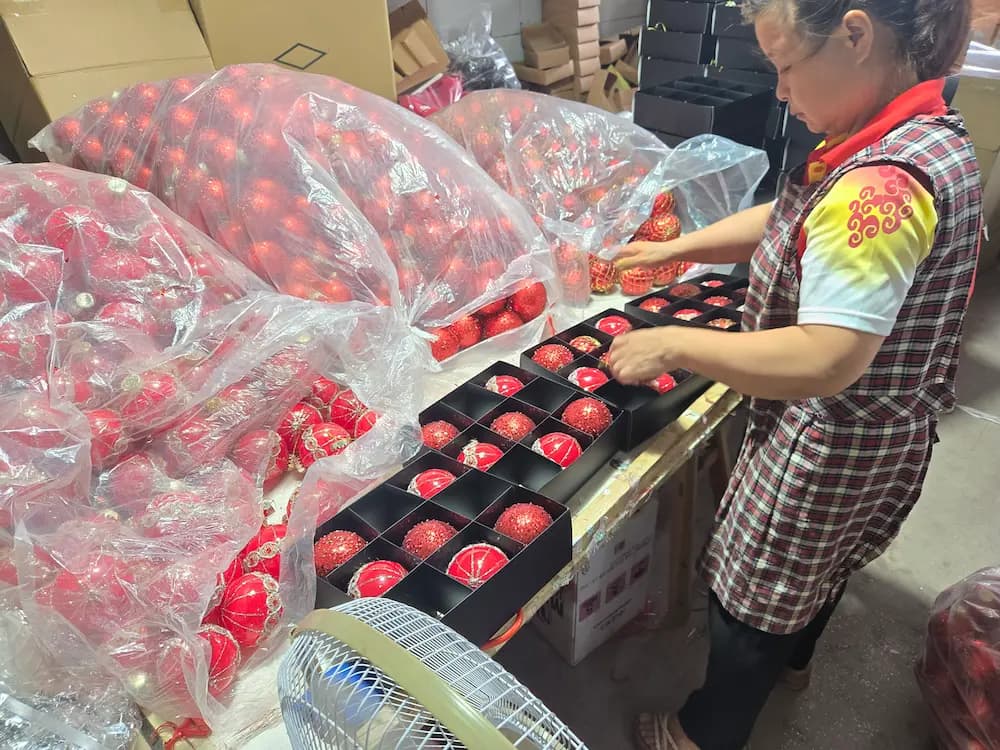
Factory-direct supplier vetting and wholesale sourcing checklists appear on our Christmas ornament supplier · wholesale Christmas ornaments manufacturers
Material preparation sets MOQ, compliance attachments, and inner-pack engineering before a single coating bay opens. A glass Christmas ornaments manufacturer inspects clarity, wall thickness, and hang-point integrity at intake because downstream painting cannot correct structural defects that surface as breakage or hang imbalance at retail. Clear and pre-coated glass spheres receive interior metallic washes—silver, gold, pearl—before exterior lacquer, matte, or lustre systems run. Borosilicate-grade clarity and consistent neck geometry are non-negotiable for hero SKUs that anchor photography and gift-set presentation. glass Christmas balls wholesale · plastic Christmas ornaments · glass Christmas ornaments
Shatterproof Christmas ornaments use ABS or PP resin with UV-stable exterior coats. Resin platforms scale at higher per-color MOQ but often deliver better landed economics when PDQ inners and pallet layouts are confirmed at sampling. Impact resistance and consistent hang weight matter for hospitality, club channels, and large fixture walls where glass liability is unacceptable. Mixed-material color walls—glass statement sizes above resin volume SKUs—require one signed palette document so coating drift does not split the fixture story mid-season.
Caps, clips, and hang hardware are materials in their own right—not accessories bolted on at the end. Metallized caps coordinate with finish families; torque specs and hang weight must be approved at pilot with photos archived for repeat seasons. Material declarations for EU and specialty retail doors often attach at pilot approval—not as a post-bulk scramble. List target markets in the first RFQ so the export desk scopes compliance packets alongside MOQ and lead time.
Glass vs resin material platforms
- Glass: clarity inspection, interior wash, fragile inner-pack engineering, lower per-color MOQ on finish heroes
- Resin shatterproof: impact baselines, UV coat adhesion at pilot, higher volume MOQ for FCL efficiency
- Caps and clips: torque validation, metallization match, proprietary tooling when OEM brief requires it
- Retail packaging: separate MOQ and labor from ornament piece counts—confirm tier at sampling
Step 3 — Hand Painting & Decoration
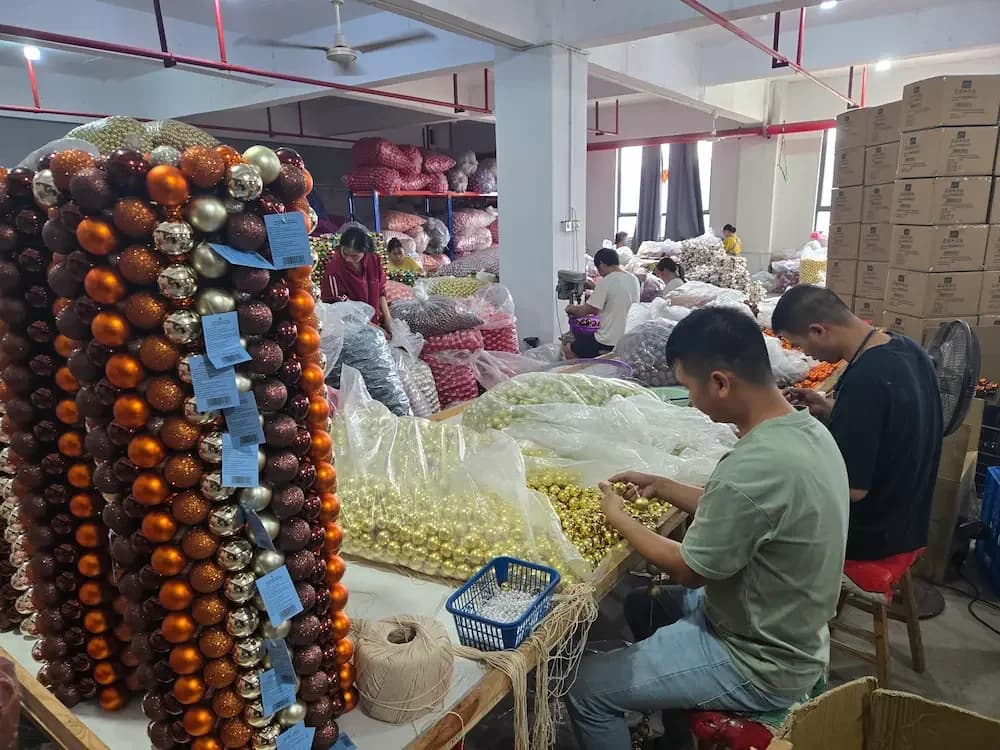
Hand painting and decoration transform line-finished spheres into seasonal assortments merchandising can defend at allocation. The Christmas ornament manufacturing process splits volume SKUs—matte resin club walls, standard metallics—on automated spray lines from craft-heavy heroes that need lustre accents, hand-painted details, interior scenes, ribbon ties, and gift-set presentation labor. Craft stations work to signed finish boards; deviations trigger hold-and-review before inner pack. Premium doors reserve craft time for limited SKUs while volume sizes run on line-finished resin—document that split at RFQ so vessel planning is honest. luxury Christmas decorations · custom Christmas ornaments · OEM Christmas ornaments
Line painting covers exterior systems after interior washes lock: clear lustre, matte exteriors, pearl veils, brushed metallics, and satin coats that must cure before the next gate opens. Each finish family carries a curing profile—high-lustre exteriors need longer dwell time than matte resin volume coats. Factories that compress curing to hit vessel dates produce finish drift visible only under retail lighting or after distribution-center humidity exposure. Batch travelers should record cure start and release timestamps so your QA partner can trace complaints back to a production window.
Hand-stringing, bow attachment, and set assembly for retail gift boxes often happen on separate packing lines from bulk coating. OEM private-label programs should confirm whether hand work is in scope for quoted MOQ and lead time—not assumed as included in unit FOB. For custom Christmas ornaments programs, finish approval locks pigment sources and cap metallization before bulk coating opens. Repeat seasons on approved platforms shorten lead times when tooling and packaging dielines are already signed.
Line finishing vs craft-station work
Line finishing suits volume walls where consistency and throughput dominate—club resin ladders, standard metallics, and matte exteriors that photograph cleanly in e-commerce grids. Craft-station work belongs on limited heroes, gift-set focal SKUs, and OEM programs where hand-painted details or lustre bands justify higher unit labor. Merchandising should flag which sizes are hero versus volume before sampling so coating bays and craft stations schedule in the right sequence for your in-store date.
Creative teams referencing mood boards without Pantone or physical references trigger expensive rework when bulk cannot match aspirational photography. Finish boards should specify interior wash, exterior coat, cap metallization, and any hand-finish steps so pilot lots compare apples to apples—not showroom polish against production-intent spheres staged without your hang hardware.
Step 4 — Electroplating & Glitter
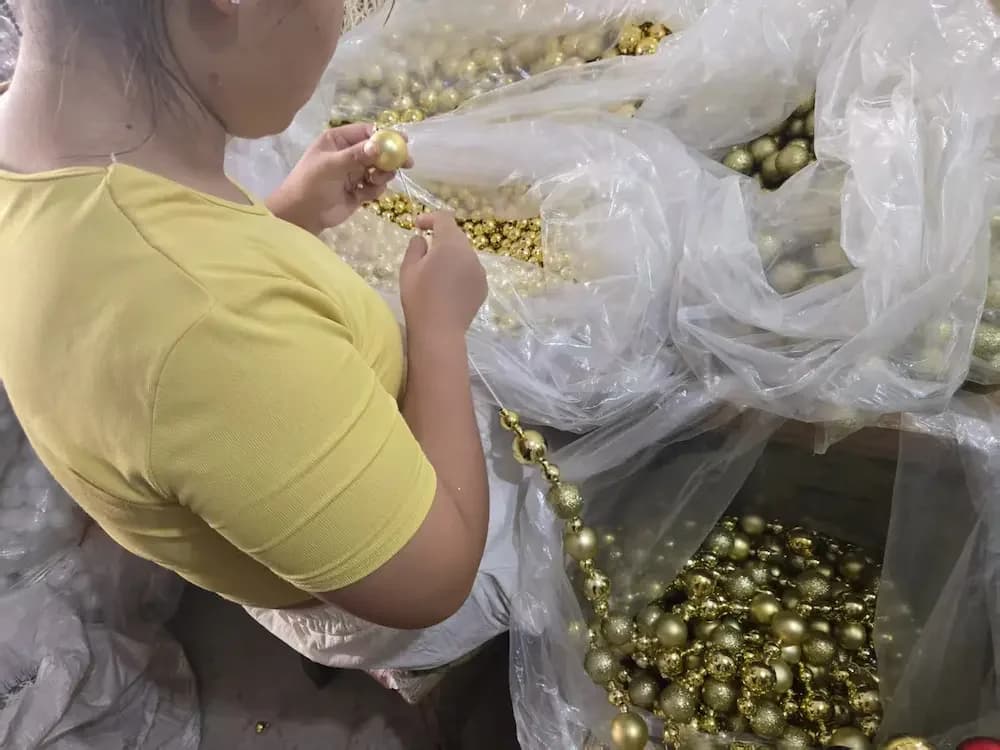
Electroplating and metallization cover cap surfaces, clip hardware, and accent bands that must match finish families on the ball body. Electroplated or vacuum-metallized caps require color-match discipline across size ladders—merchandising expects one metallization story on the fixture even when diameters change. Cap torque and hang alignment are validated at pilot with records tied to master carton labels for vendor portal upload. Interior metallic washes on glass—gold, silver, copper, antique tones—are part of the plating story inside the sphere, not only on caps.
Lot traceability links interior wash batches to exterior coat runs so repeat seasons restart without pigment surprises. Skipping pilot comparison on interior and exterior together is a common source of hero-SKU drift at bulk. A Christmas ornament factory that serves both glass heroes and resin volume walls should format material and finish documentation per SKU—not one aggregated sheet implying identical profiles across diameters and substrates.
Glitter and specialty surface effects
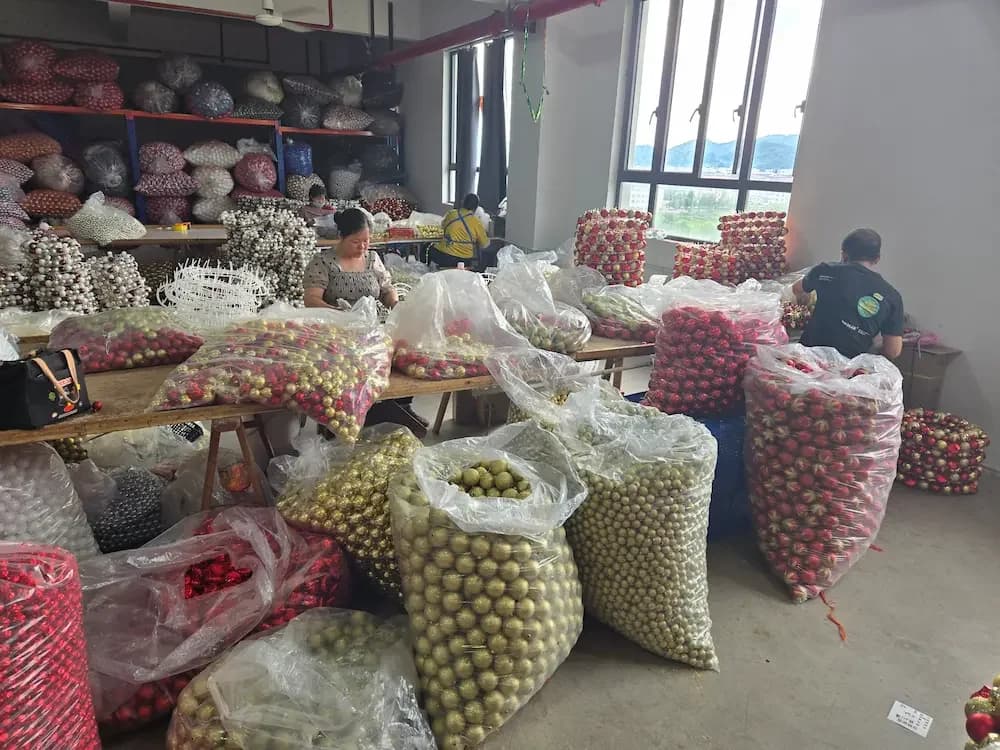
Glitter infusion, flock, and micro-glitter veils are among the most calendar-intensive steps in the Christmas ornament manufacturing process. Controlled glitter density reads premium on limited heroes; entire mass walls coated in heavy glitter often fail club drop tests and photograph as visual noise online. Document which SKUs carry specialty effects at RFQ so craft allocation and curing windows are realistic. luxury Christmas ornaments
Flock and velvet-touch exteriors require adhesion baselines and rub tests at pilot—especially when vendor manuals specify hospitality or high-traffic retail installs. Interior glitter infusion on resin spheres—glitter suspended inside clear or tinted shells—requires separate adhesion protocols from exterior glitter bands. Pilot lots should include rub tests and photography under the same lighting merchandising uses for e-commerce grids.
Peak-season coating bay reservation is finite. Programs that add last-minute glitter heroes after bulk authorization often queue behind club resin walls already booked for Q2 vessel windows—another reason to lock ladder and finish families at RFQ, not after photography.
Step 5 — Quality Inspection
Wholesale MOQ bands, production capacity, channel economics, and FCL planning for seasonal programs are on our wholesale Christmas ornaments · wholesale Christmas ornaments manufacturers
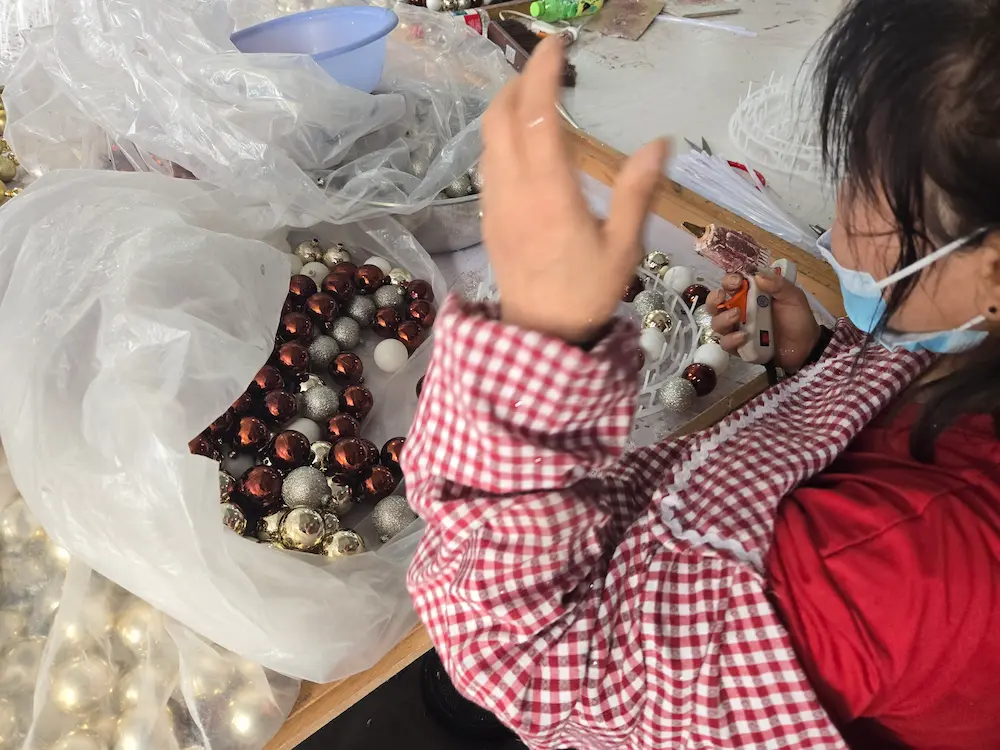
Quality inspection is not a generic certificate pinned to a trader's email. Reliable Christmas ornament factory partners provide batch travelers with coating lot IDs, cap torque records, inner-pack drop-fit photos, and acceptable-quality-level sampling aligned to your distribution-center spec—not internal tests with no witness. Private-label accounts increasingly require structured QC packets uploaded to vendor portals before payment release. Christmas ornament factory audit ultimate guide · Christmas ornament manufacturer FAQ
Glass programs need clarity checks, coating adhesion review, and hang-balance verification under controlled lighting. Resin shatterproof lines add impact and UV-coat tests when vendor manuals require them. Mixed-material walls need material declared per SKU so inspectors apply glass fragility criteria to heroes and impact protocols to volume SKUs—not one checklist copied from flat décor categories.
Third-party pre-shipment inspection can witness pilot comparison when your manual requires it—but PSI does not replace factory discipline on pigment sources, partition engineering, or commercial invoice symbology aligned to master carton marks. Choose a Christmas ornament factory that formats QC evidence for your QA partner before you commit MOQ.
Inspection gates before inner pack opens
- Coating lot trace from pilot approval through master carton labels
- Cap torque and hang-balance verification under controlled lighting
- Inner-pack drop-fit photos against your DC spec or agreed ISTA baseline
- Clarity and adhesion checks on glass; impact and UV protocols on resin
- Batch traveler archive for repeat-season programs and vendor portal upload
Step 6 — Packaging & Export
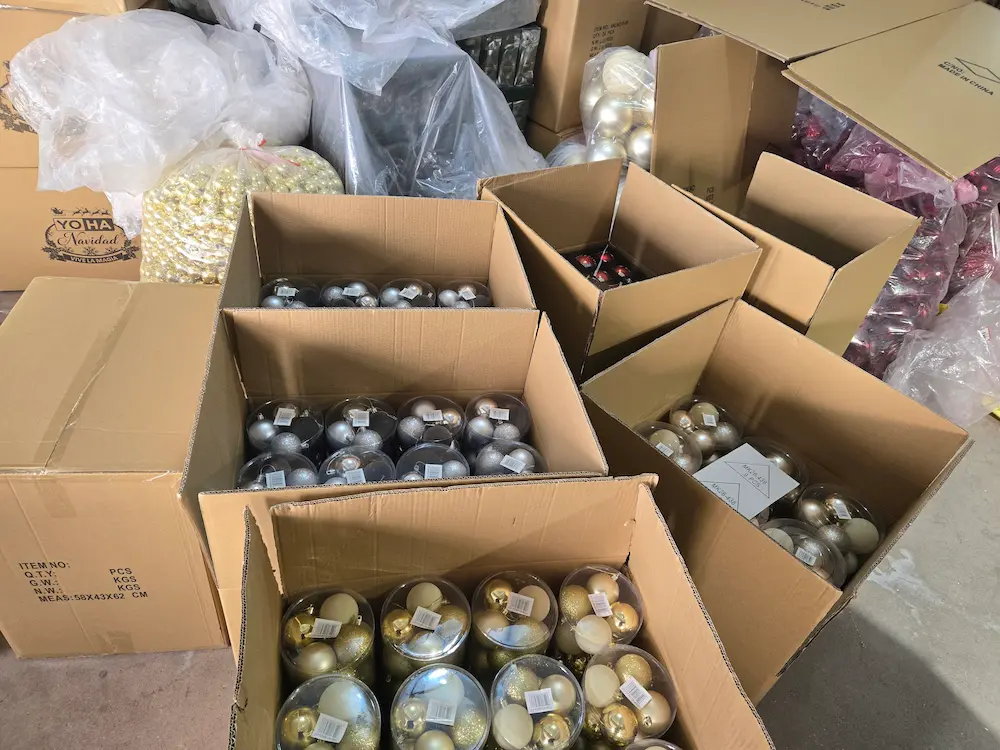
Packaging is product engineering for fragile spheres—not an afterthought once bulk coating finishes. Egg-crate partitions, foam-fit gift boxes, PDQ shippers, and master cartons must align to your distribution-center drop spec before inner-pack lines open. Barcode symbology and GS1 marks should be verified at pilot against commercial invoice assumptions. Packaging tiers carry separate MOQ and labor from ornament piece counts. Bulk export egg-crate inners differ from retail window gift boxes with multilingual copy and recycling symbols for EU doors. import Christmas ornaments from China · retail packaging Christmas ornaments · Christmas ornament factory
International export experience shows up in FOB discipline—not only in freight quotes. Pallet photos, weight distribution notes, carton mark checks, and commercial invoice alignment should match nominated ocean bookings before release. Discrepancies surface at customs or retailer receiving with appointment penalties importers cannot recover mid-season. Factories serving US, EU, UK, Canada, and Australia programs should name vessel cut-off calendars honestly and document moisture management during summer peak lanes.
Repeat-season export programs inherit archived finish masters, inner-pack specifications, and compliance upload formats when packaging tiers are unchanged—delta SKUs trigger focused updates rather than full program restarts when prior-season receiving met expectations. Share set-count architecture and inner-pack assumptions when asking for MOQ. Under-filled containers inflate landed cost even when unit FOB looks attractive on a spreadsheet.
Export staging checklist
- Master carton marks match commercial invoice and packing list symbology
- Pallet photos and weight distribution notes align to forwarder lane requirements
- Inner-pack drop evidence archived for distribution-center manual defense
- Moisture management documented for summer peak trans-Pacific lanes
- FOB release coordinated to vessel cut-off—not optimistic defaults that ignore peak compression
Why Choose Shuanglin Crafts
Shuanglin Crafts is a ball-native Christmas ornament factory in Zhejiang with documented glass lines, resin shatterproof platforms, luxury finish bays, and OEM tooling paths aligned to US, EU, UK, and Australia export programs. Factory photography covers design sampling, coating bays, hand-painting craft stations, electroplating, glitter finishing, quality inspection, packaging lines, and export staging—evidence wholesale buyers and brand teams review before multi-container MOQ commits. Christmas ornament manufacturer · wholesale product catalog · OEM development process · contact Shuanglin Crafts · Christmas ornament factory
OEM and private-label programs include custom caps, retail dielines, Pantone color walls, and mixed glass-resin palettes governed by one signed finish document. The export desk returns MOQ bands tied to inner-pack density and vessel lane—not catalog defaults that ignore your door requirements. Sampling gates and pilot-to-bulk comparison protect programs before bulk coating opens.
When your brief includes assortment ladder, packaging tier, destination market, and vessel dates, our export desk typically replies within twenty-four hours with program-specific MOQ and sampling scope. Browse our wholesale product catalog for finish families, review the OEM Christmas ornaments process for private-label paths, or contact us when you are ready to move from research to strike samples.
Conclusion
The Christmas ornament manufacturing process runs from design and sampling through material preparation, hand painting and decoration, electroplating and glitter, quality inspection, and packaging for export—not as isolated factory photos but as a linked sequence with batch travelers and finish boards your QA partner can audit. Wholesale buyers who understand each step ask sharper questions at RFQ, scope realistic calendars, and reduce the coordination risk that trading layers add when peak-season coating windows compress. Christmas ornament manufacturing process · Request a factory quote · Get product catalog · Send OEM requirements
Whether you source custom Christmas ornaments, glass hero SKUs, or OEM Christmas ornaments for private-label retail, verify pilot gates, coating lot trace, and export discipline before bulk authorization—not after planograms lock. Pair this walkthrough with our broader manufacturing process pillar and factory tour when you build allocation committee packets for 2026.
Ready to see the process on your SKUs? Request a factory quote with your ladder and vessel dates, browse finish families in our product catalog, or send OEM requirements when custom caps, packaging, or private-label tooling are part of your brief.
Ready to Start Your Christmas Ornament Program?
Wholesale buyers, importers, and brand teams are invited to request a free quotation, sample run, and OEM consultation with our export desk.
Frequently asked questions
What are the main steps in the Christmas ornament manufacturing process?
Factory-direct programs typically run six linked steps: design and sampling, material preparation, hand painting and decoration, electroplating and glitter, quality inspection, and packaging for export. Each step should produce batch travelers and finish records your QA partner can audit before bulk authorization.
How long does it take to make Christmas ornaments from design to finished product?
New OEM tooling often needs ninety to one hundred twenty days to first vessel after brief lock. Repeat platforms on approved molds may ship in forty-five to sixty days after master approval. Specialty glitter, flock, and hand-finish heroes add craft and curing calendar that volume resin walls do not.
What is the difference between OEM and custom Christmas ornaments in production?
OEM programs embed proprietary shapes, cap branding, retail dielines, and private-label finish walls with tooling and pilot gates. Custom Christmas ornaments on approved platforms customize color, finish, and packaging without new molds on every SKU. Confirm which path your brief requires before merchandising commits in-store dates.
Why does quality inspection matter before packaging?
QC gates catch coating drift, cap torque failures, and inner-pack fit issues before cartons ship—when correction is still possible at origin. Structured inspection records also support vendor portal uploads and distribution-center defense that traders rarely document at batch level.
Can one Christmas ornament factory handle glass and resin programs together?
Ball-native factories run glass heroes and shatterproof resin volume walls under one signed palette document and one export desk—reducing coordination risk versus brokers who assemble unrelated partners. Mixed-material ladders should declare material per SKU so QC and compliance packets generate correctly at pilot.