Custom Christmas ornaments are not mass-produced from a generic catalog mold and shipped overnight. OEM Christmas ornaments and private-label programs move through a documented factory sequence—design concept, artwork approval, mold development, material selection, line production, hand decoration, quality inspection, and export packaging—each gate protecting finish consistency, hang balance, and distribution-center receiving outcomes. Christmas ornament manufacturer · wholesale product catalog · request a factory quote
Shuanglin Crafts supports wholesale buyers with finished ornament platforms, OEM development, factory tours, and direct export desk contact—use the links below when you are ready to move from research to sampling. product catalog · OEM program overview · factory tour · contact the export desk
Wholesale buyers and brand teams who understand how custom Christmas balls are made ask sharper questions at RFQ, scope realistic MOQ bands, and avoid seasonal fire drills when coating drift or inner-pack failures surface after photography locks. This factory-focused guide walks through the eight production steps a Christmas ornament manufacturer runs for custom programs—and how to start an OEM ornament project with the export desk.
Whether you need custom Christmas ornaments for specialty gift boxes, custom Christmas balls for a fixture-ready color wall, or resin volume SKUs under one palette document, the same discipline applies. Review our Christmas ornament manufacturer overview and product catalog before your first brief.
Step 1: Design Concept
Design concept translates merchandising intent into a factory-scoped program brief. A Christmas ornament manufacturer needs in-store or reset date, size ladder, set counts per SKU, material preference—glass, resin, or mixed color wall—and packaging tier before quoting MOQ or sampling windows. Vague creative direction produces vague quotes and expensive corrections after bulk coating opens.
Custom Christmas ornaments often combine hero glass sizes with shatterproof resin volume on one palette document. Merchandising should flag which SKUs are statement reflectivity versus club-scale impact resistance so the factory maps coating bays and craft stations realistically. Attach finish boards, Pantone references, or reference ornaments when available—mood imagery alone does not lock pigment sources for bulk production.
- Target seasonal reset date and nominated vessel window
- Size ladder from 40 mm to 120 mm+ with hero versus volume roles
- Finish families: lustre, matte, pearl, glitter, interior wash, cap metallization
- Packaging path: bulk export, window gift box, or PDQ-ready inners
- Destination market compliance attachments when EU or specialty retail applies
Step 2: Artwork Approval
Artwork approval locks visual standards before mold investment and pilot production. For custom Christmas balls, this includes exterior lacquer systems, interior metallic washes, cap branding geometry, hang hardware alignment, and retail dieline placement when private-label boxes apply. Approval happens under controlled lighting—not showroom spotlights that hide coating variance.
Factory-direct supplier vetting and wholesale sourcing checklists appear on our Christmas ornament supplier · wholesale Christmas ornaments manufacturers
Signed finish masters become contractual references archived with master IDs. Photography and planogram teams should not schedule shoots until pilot lots compare favorably to those masters using the same pigment sources planned for bulk. Skipping artwork approval is a frequent source of returns when bulk subtly drifts from the sample buyers approved in a quick visit.
Documents to archive at approval
- Signed finish boards or Pantone references with master IDs
- Cap and hanger geometry drawings with hang-balance targets
- Retail packaging dielines with barcode and multilingual copy when required
- Pilot comparison photos under agreed lighting conditions
- Inner-pack sketch showing partition density for set-count architecture
Step 3: Mold Development
Mold development covers custom shapes, cap tooling, and hang geometry when OEM Christmas ornaments depart from catalog platforms. New tooling often requires twenty-five to thirty-five days before strike samples run—budget ninety to one hundred twenty days to first vessel for entirely new shapes and retail packaging tiers. Repeat seasons on approved molds may ship in forty-five to sixty days when finishes and dielines are unchanged.
Tooling ownership and amortization should be explicit in OEM contracts—especially when hang geometry is brand-specific. Strike samples validate wall thickness, coating adhesion on complex curves, and cap metallization before bulk windows open. Custom Christmas ornaments with proprietary silhouettes need mold development scoped early; adding shapes after creative approval compresses vessel timelines and forces coating shortcuts.
Step 4: Material Selection
Material selection determines QC criteria, MOQ economics, and inner-pack engineering for custom Christmas ornaments. Glass custom Christmas balls prioritize clarity inspection, interior wash adhesion, cap torque, and hang balance for gift-set perceived value. ABS and PP resin platforms prioritize impact resistance, UV-coat stability, and PDQ-friendly set architecture for club and hospitality programs. wholesale product catalog
Mixed-material color walls are common in OEM development: glass heroes at eye level with shatterproof resin volume at basket-fill price points. One signed palette document must govern pigment sources across platforms—otherwise coating drift splits the fixture story mid-season. Confirm material per SKU in the brief so inspectors apply glass fragility protocols to heroes and impact tests to resin volume—not a generic checklist copied from unrelated categories.
- Glass: clarity, interior wash, cap metallization, lustre and pearl exteriors
- Resin: impact resistance, UV coat, glitter infusion, brushed metallic films
- Mixed walls: single palette document across glass and shatterproof SKUs
- Compliance: substance declarations and recyclability when EU doors require them
Step 5: Production Process
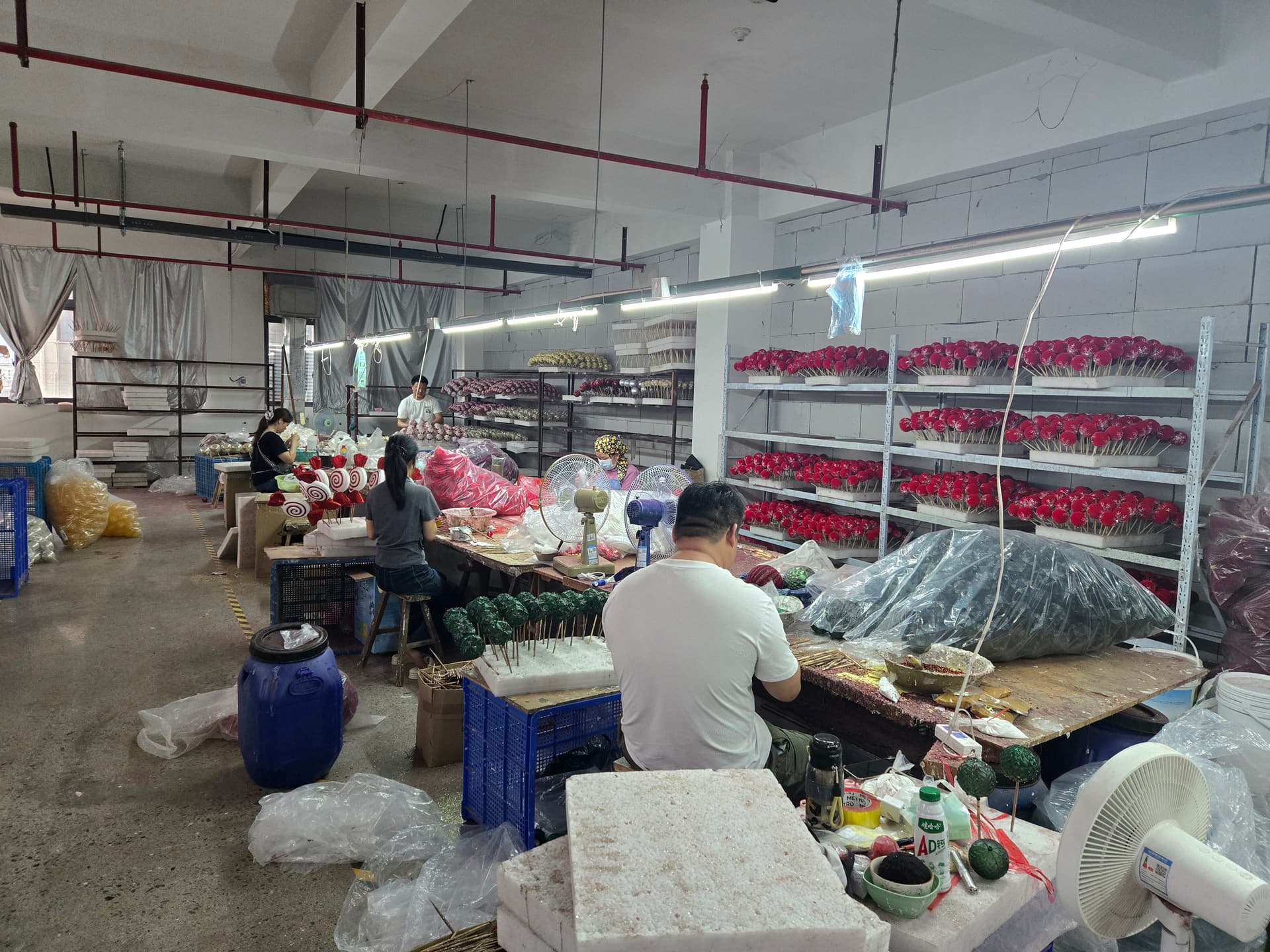
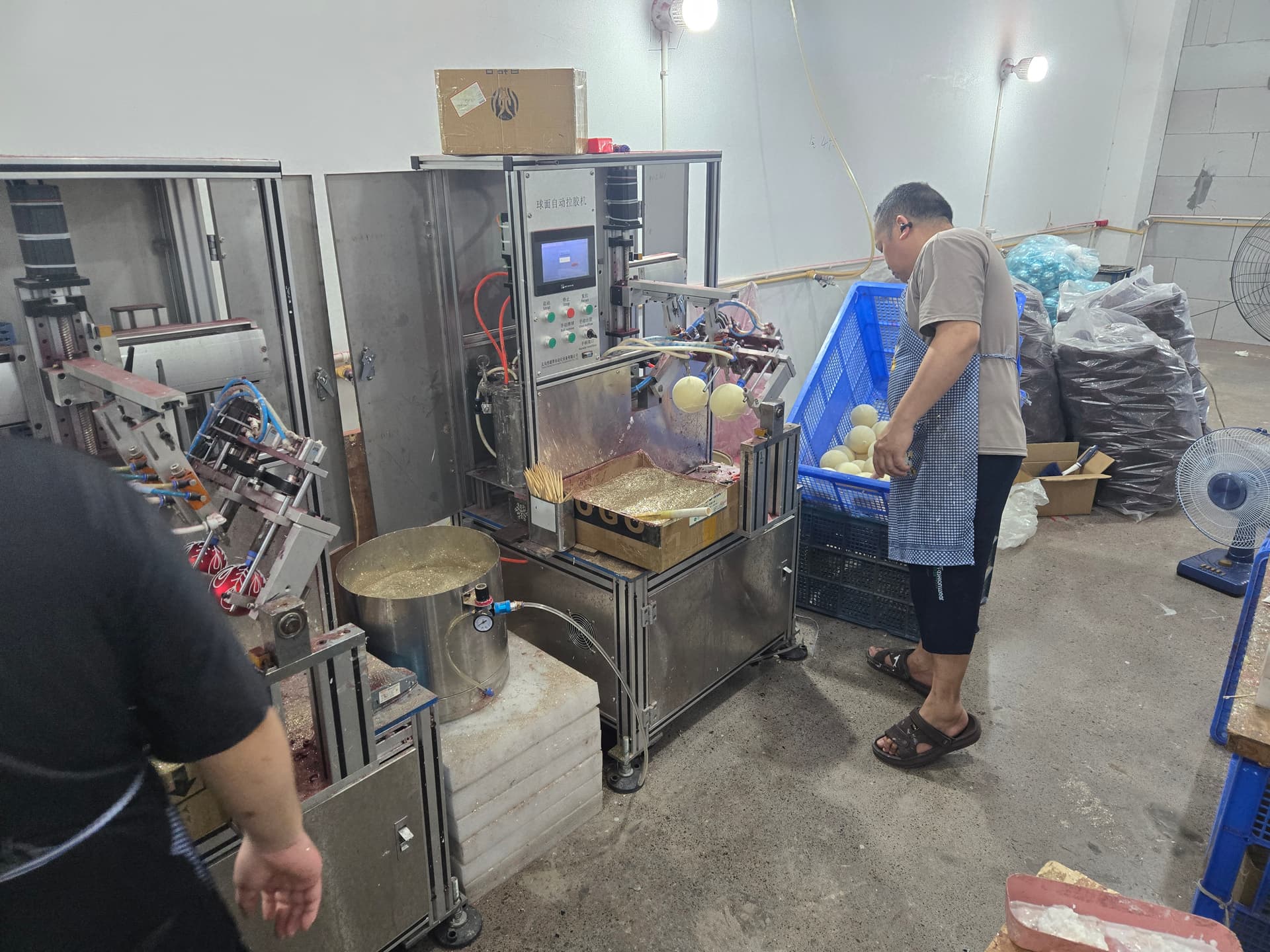
Production process begins after pilot approval locks pigment sources and inner-pack intent. Forming establishes wall thickness and hang-point integrity on glass and resin lines. Coating bays sequence finish families to protect MOQ economics—buyers who add micro-glitter heroes after approval may shift craft allocation and extend lead time. Line changeovers between colors consume calendar days merchandising teams sometimes omit from vessel planning. Christmas ornament manufacturer
Wholesale MOQ bands, production capacity, channel economics, and FCL planning for seasonal programs are on our wholesale Christmas ornaments · wholesale Christmas ornaments manufacturers
Custom Christmas ornaments at scale run with batch travelers tied to coating lots so import desks can trace distribution-center complaints back to production. Production pacing respects curing windows for sensitive metallics and summer humidity management during export staging. A Christmas ornament manufacturer that cannot explain coating lot trace on travelers is unlikely to defend your brand when fixtures combine multiple sizes under one program brief.
Hold points during bulk runs
- Coating lot change notifications before adjacent color runs
- Cap torque and hang-alignment checks on sample bases per shift
- Pilot-to-bulk comparison when pigment suppliers change mid-season
- Craft-station allocation for hand-detail SKUs booked separately from line-only finishes
Step 6: Hand Painting And Decoration
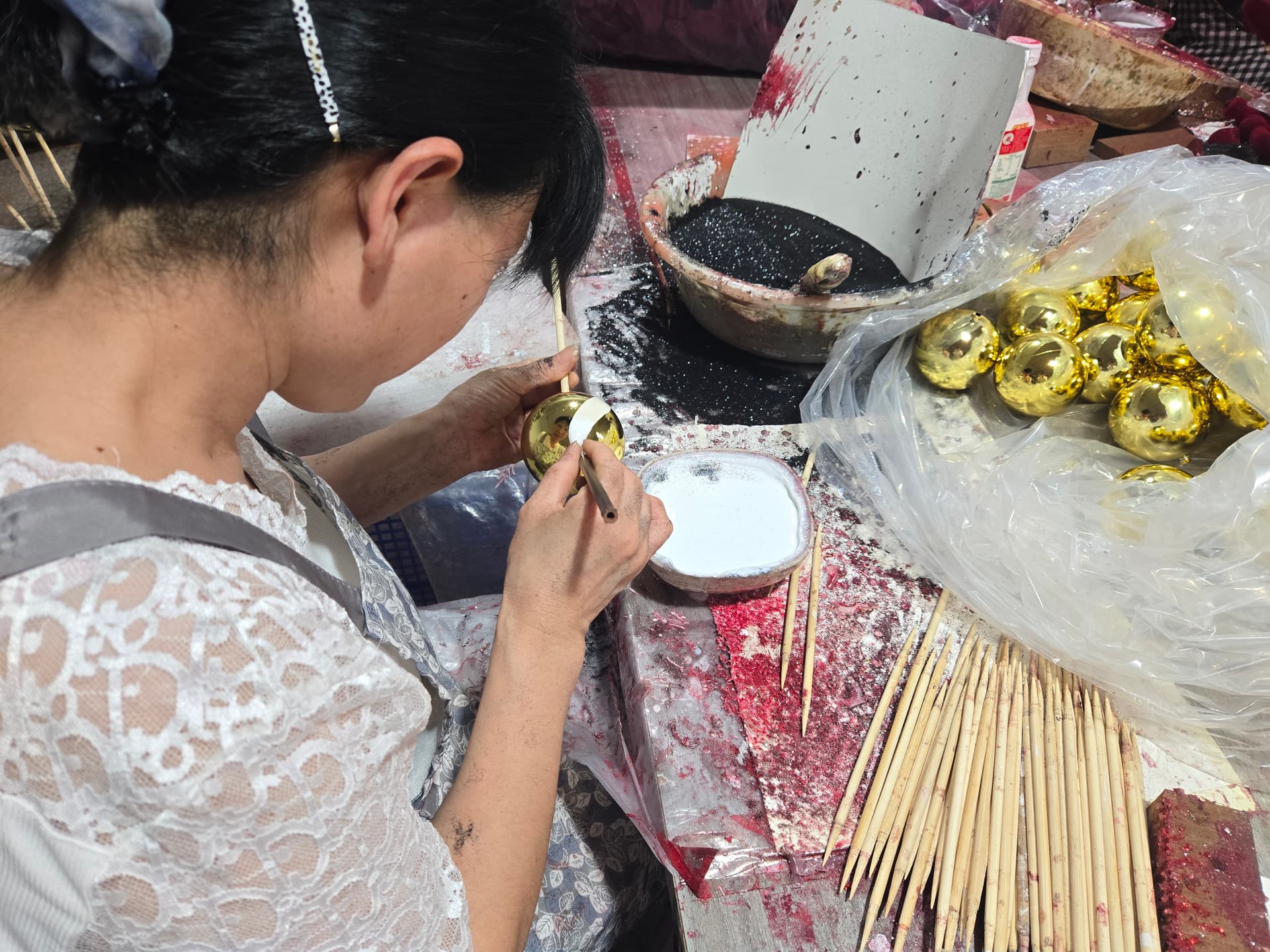
Hand painting and decoration cover lustre accents, micro-glitter bands, flock, hand-applied details, and artisan textures reserved for premium custom Christmas ornaments. Craft stations work to signed finish boards; deviations trigger hold-and-review before inner pack—not informal rework on the packing line. Document which SKUs require craft time versus line-only finishes so bulk windows reflect realistic labor allocation. OEM development process
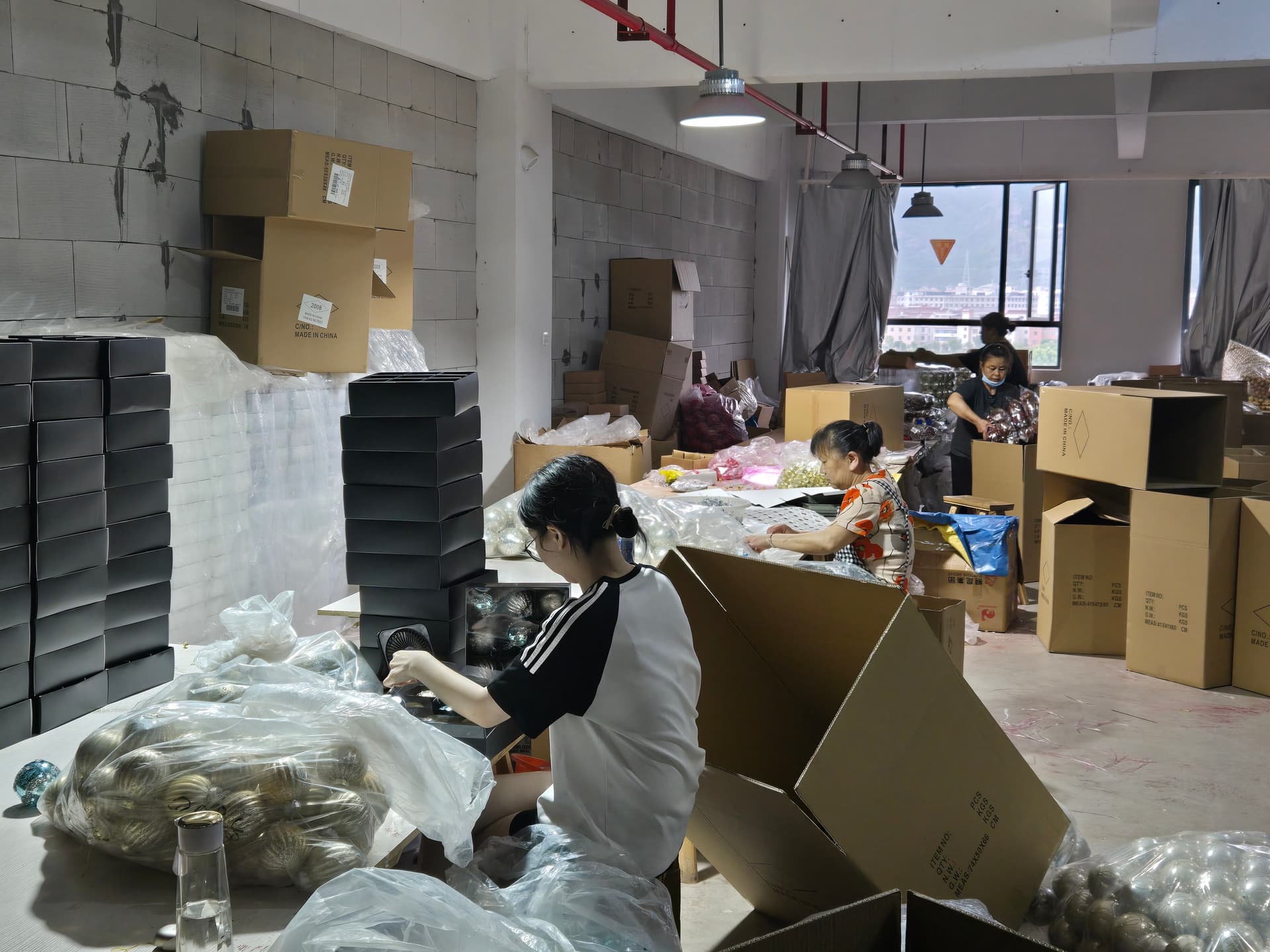
OEM Christmas ornaments with gift-box heroes often combine measured metallics, interior scenes, and cap branding that cannot run through high-speed coating alone. Photography teams should wait for craft-complete pilot approval before scheduling shoots—showroom-only samples in foam trays tell importers little about distribution-center outcomes when partitions and drop heights differ from bulk inner packs.
Step 7: Quality Inspection
Quality inspection for custom Christmas ornaments is material-specific and evidence-based—not a generic factory certificate. Glass programs need clarity checks, coating adhesion review, hang-balance verification, and cap torque records. Resin lines add impact and UV-coat tests when vendor manuals require them. Batch travelers tie coating lots to master cartons so QA partners can audit release authorization against signed masters.
Private-label accounts increasingly upload structured QC packets to vendor portals before payment release. Request inner-pack drop-fit photos at pilot referencing your distribution spec—not aggregate factory tour images without SKU context. Pre-shipment inspection should review hold logs and coating lot records, not only carton counts, when your vendor manual requires witness or third-party QA.
- Pilot-to-bulk comparison under controlled lighting
- Coating lot IDs on batch travelers for each production lot
- Inner-pack drop fit and partition integrity per DC spec
- Carton mark verification against commercial invoice symbology
- Corrective action protocol for cap defects or coating drift
Step 8: Packaging And Shipping
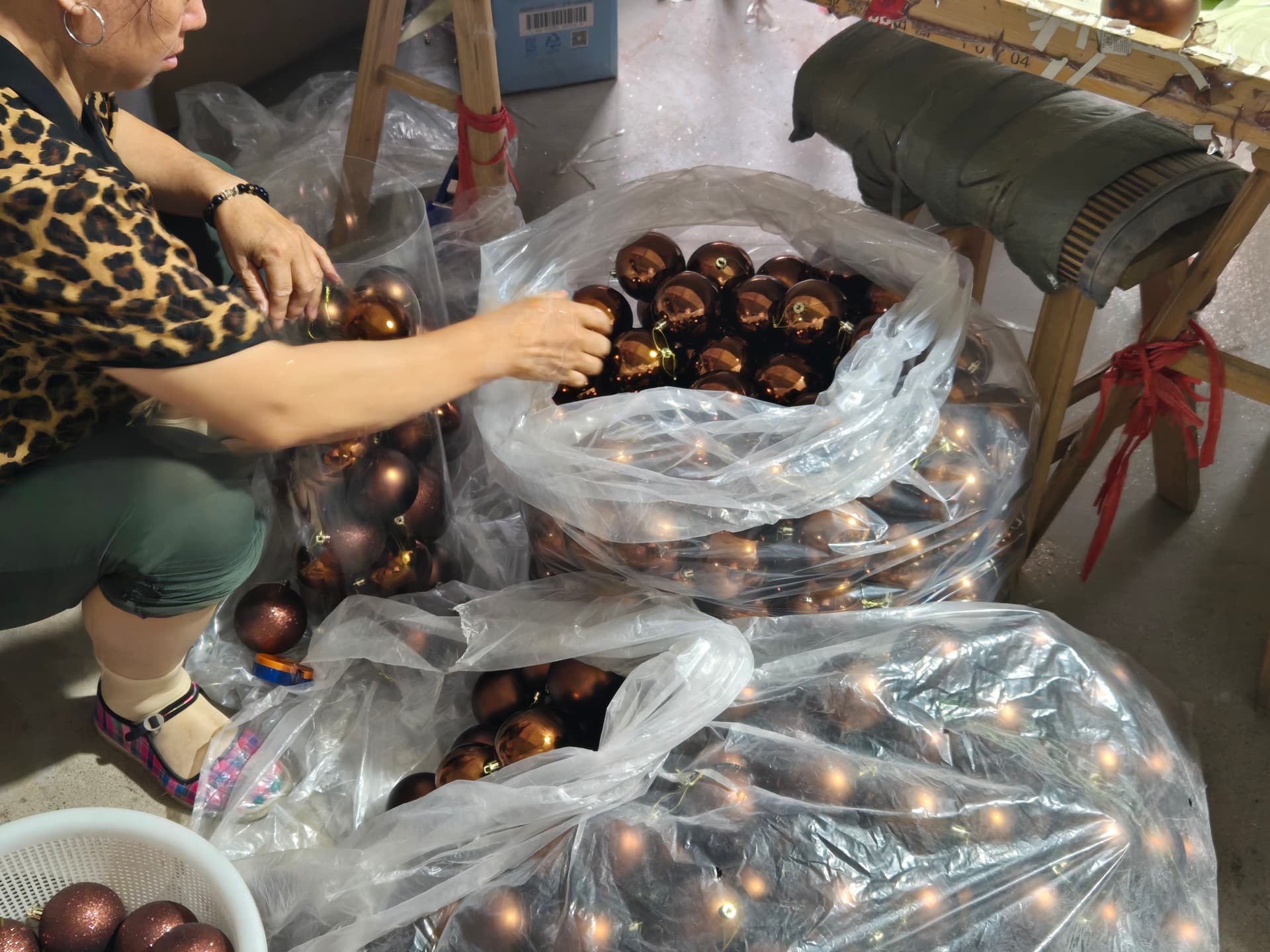
Packaging and shipping define whether custom Christmas ornaments arrive sellable at the distribution center—not only whether they look correct in a showroom. Partitioned inners, foam-fit gift boxes, PDQ layouts, and corner-protected master cartons must be validated at pilot when vendor manuals specify fixture-height drops or conveyor transfers. Retail packaging upgrades change master carton cube and FCL efficiency—model landed cost with partition weight, not FOB unit price alone. request a factory quote
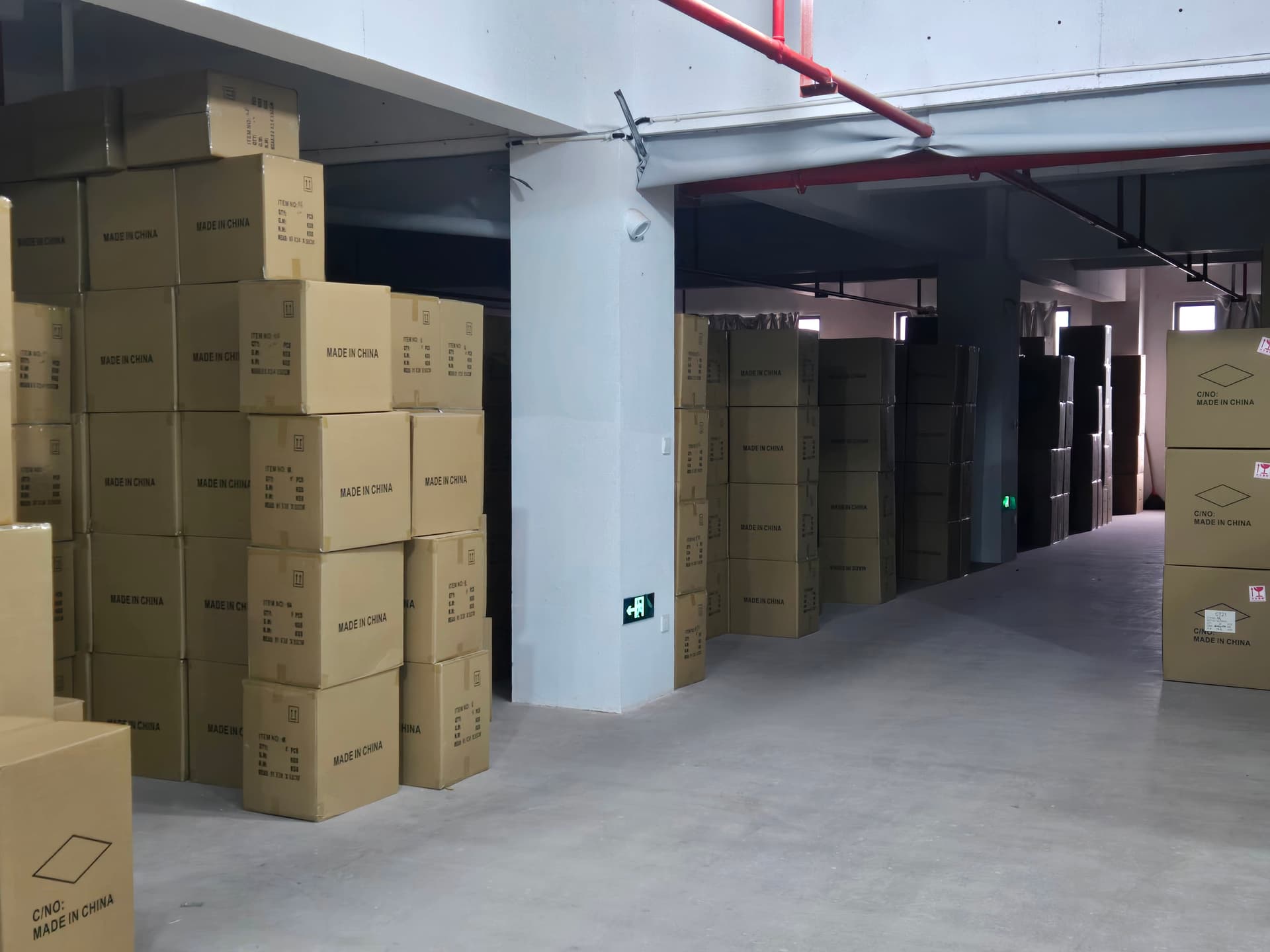
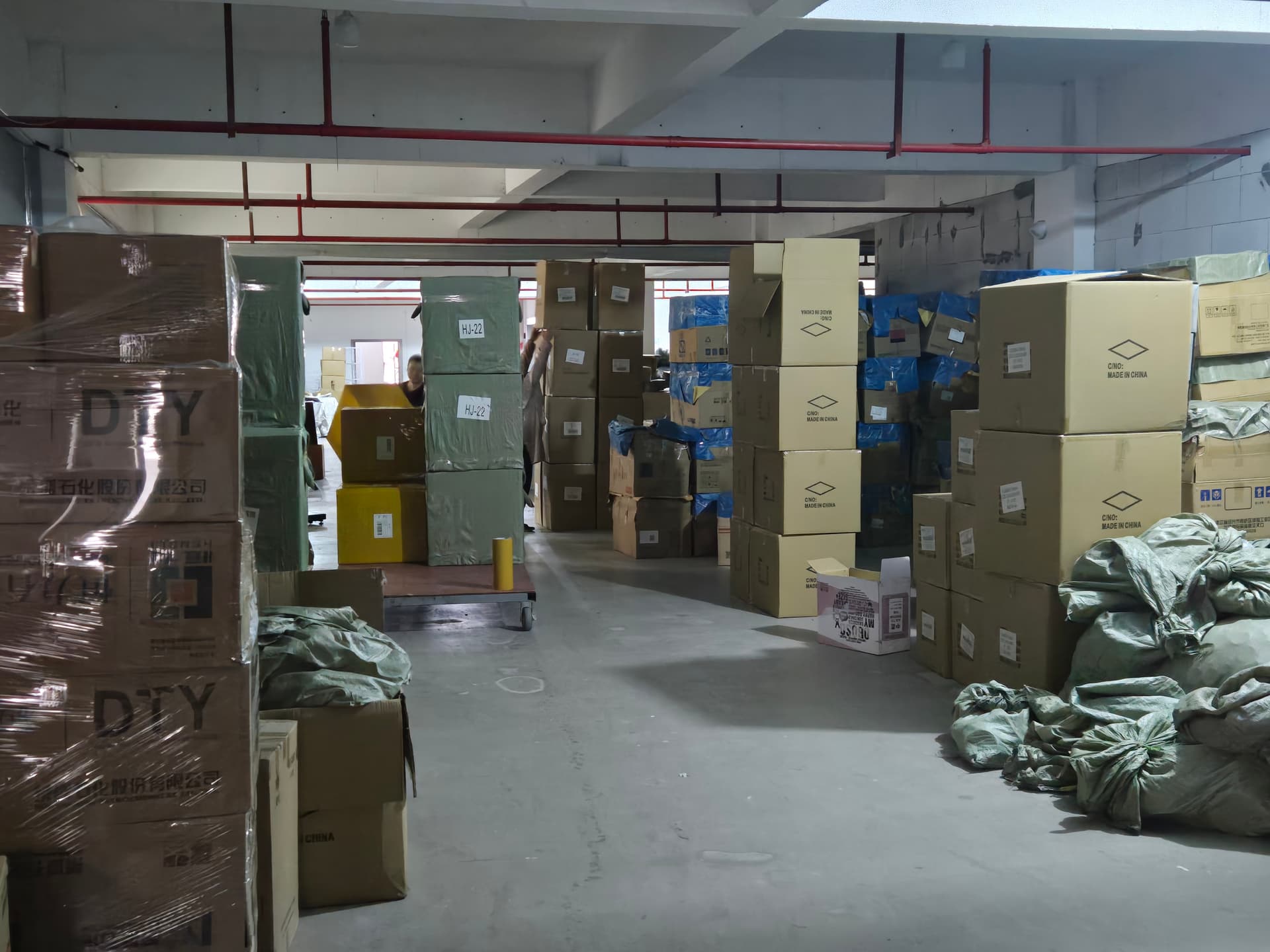
Export staging aligns production completion with nominated ocean bookings. FOB release includes pallet photos, commercial invoice alignment, and carton marks verified against packing lists. Moisture management and stacking limits should be confirmed with your forwarder for long trans-Pacific lanes where condensation risk affects sensitive metallics on custom Christmas balls.
Export release checklist
- Commercial invoice and packing list aligned to carton marks
- Pallet photos and weight distribution notes for forwarder booking
- GS1 symbology and ship-to marks approved before bulk print
- Pre-shipment inspection evidence uploaded when vendor portal requires it
- FOB handoff coordinated with nominated vessel and humidity management plan
How To Start An OEM Ornament Project
Starting an OEM ornament project begins with a complete program brief—not a single SKU photo and a target price. Share assortment ladder, finish references, packaging tier, destination market, and reverse-engineered timeline so the Christmas ornament manufacturer maps sampling scope, mold development, and bulk coating windows before merchandising locks photography. Christmas ornament manufacturer · OEM development process · wholesale product catalog · request a factory quote
Glass ornament finish families, clarity QC, and export specifications are documented on our glass Christmas ornaments
Contact the export desk once design concept and artwork direction are stable enough to quote MOQ bands honestly. First-season programs should complete structured qualification—virtual line tour, pilot approval, packaging sign-off—before full seasonal allocation. Repeat seasons inherit archived masters when platforms carry forward, shortening lead times when pigment sources and inner packs remain unchanged.
Pair this manufacturing walkthrough with our OEM development process, Christmas ornament manufacturer landing page, and wholesale product catalog. Reliable custom Christmas ornaments depend on gated factory discipline—not rushed quotes that hide partition downgrades or unsigned coating masters until pre-shipment scramble.
Next steps with Shuanglin Crafts
Ready to scope a program? Request a factory quote with your assortment ladder and vessel dates, get our product catalog for finish families and MOQ bands, or send OEM requirements if you need custom caps, packaging, or private-label tooling. Request a factory quote · Get product catalog · Send OEM requirements
You can also review our production setup on the factory page or message the export team through contact when you need lead times confirmed before allocation. Factory tour · Contact export desk
Frequently asked questions
How long does it take to make custom Christmas ornaments?
New OEM tooling and packaging often require 90–120 days to first vessel. Pilot sampling typically runs 10–21 days for glass and 12–16 days for resin once the brief is confirmed; bulk production often spans 35–70 days after approved masters.
What is the difference between custom Christmas ornaments and catalog wholesale lines?
Custom programs include proprietary shapes, cap branding, retail dielines, and private-label finishes with mold development and artwork approval gates. Catalog wholesale lines use documented platforms with MOQ per finish—both can run under one palette when scoped correctly.
Why is artwork approval required before mold development?
Signed finish masters lock pigment sources, cap geometry, and packaging intent before tooling investment. Skipping approval risks bulk coating drift, photography mismatches, and costly rework when bulk subtly differs from showroom samples.
Can one factory produce custom glass and resin ornaments together?
Ball-native Christmas ornament manufacturers often run glass and resin under one export desk with a single palette document—useful for mixed hero-and-volume color walls when material-specific QC gates are documented per SKU.
What QC documents should importers require for custom ornaments?
Batch travelers with coating lot IDs, pilot-to-bulk comparison photos, cap torque records, inner-pack drop-fit documentation, and pre-shipment evidence formatted for your vendor portal—not generic inspection certificates without SKU context.
How do I start an OEM Christmas ornament project with a factory?
Submit a program brief with in-store date, size ladder, finish references, packaging tier, and destination market through the contact path. The export desk replies with MOQ bands, mold lead times, and sampling scope—usually within 24 hours.