Teams that import Christmas decorations from China need more than a unit-price spreadsheet—they need MOQ discipline, coating consistency, QC documentation, and packaging that survives distribution-center handling. Seasonal ball programs fail quietly when importers treat ornaments like general giftware: cap mismatch, coating drift, and crushed master cartons surface after photography and planograms are already approved. import Christmas ornaments from China · Christmas decoration manufacturer · Christmas ornament factory · Christmas ornament factory tour
Shuanglin Crafts supports wholesale buyers with finished ornament platforms, OEM development, factory tours, and direct export desk contact—use the links below when you are ready to move from research to sampling. product catalog · OEM program overview · factory tour · contact the export desk
China remains the dominant production base for spherical Christmas baubles because finish depth, hand-finishing capacity, and export packaging expertise cluster in ball-native factories—not repackaged décor traders. Wholesale buyers in the United States and European Union who document factory gates early reduce markdown risk and protect private-label reputation across repeat seasons.
This guide walks import desks through factory selection, verification, MOQ economics, Incoterms, compliance attachments, and reverse-engineered seasonal calendars. Pair it with our supplier checklist and MOQ guide before you allocate Q4 capacity.
Why China dominates Christmas ornament supply
Christmas ball production requires specialized coating bays, humidity-aware staging, and inner packs engineered around fragile curves. General décor suppliers may broker ornaments but rarely document batch travelers, coating lot traceability, or hang-balance checks at scale.
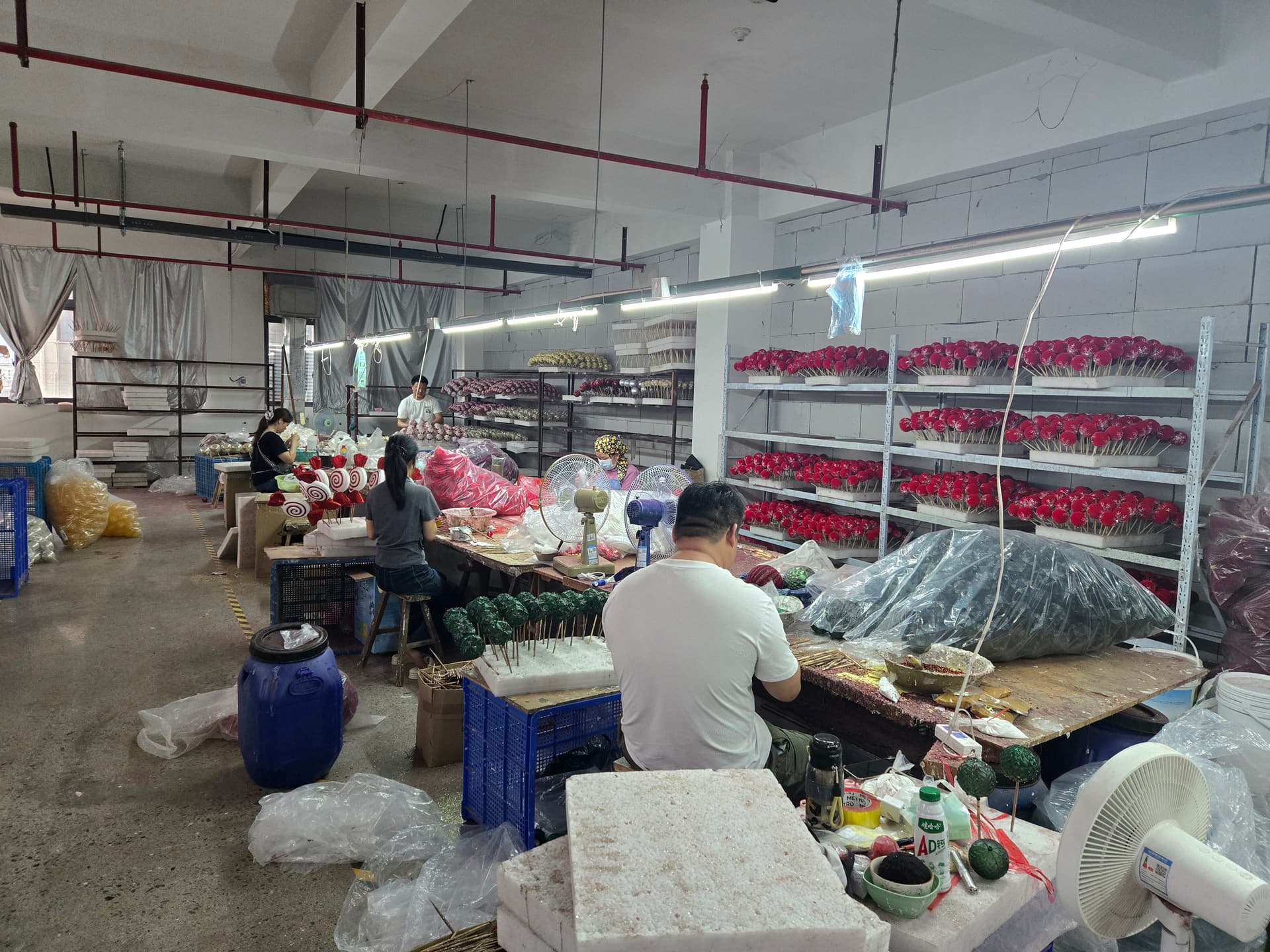
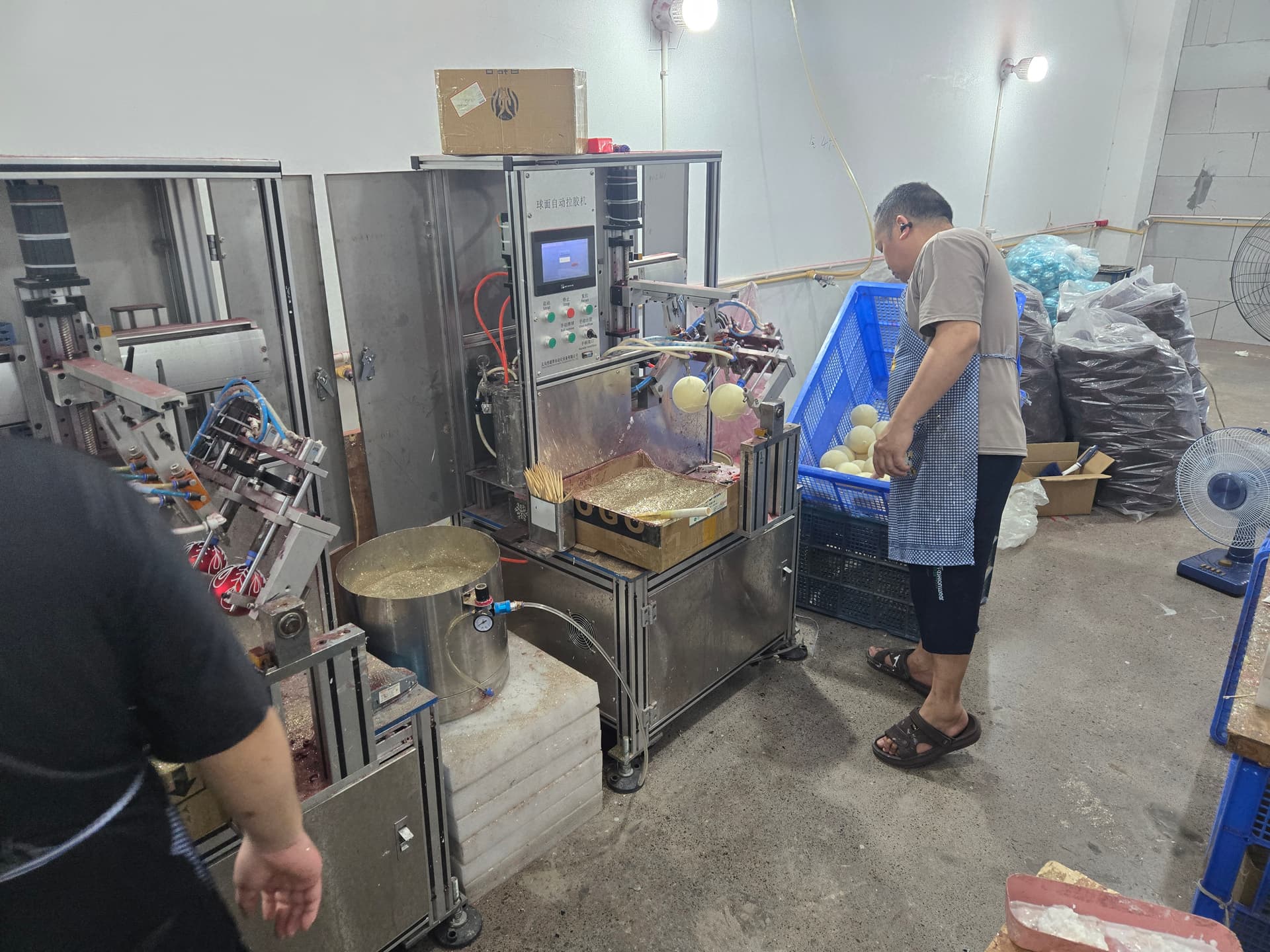
Ball-native manufacturers in coastal export zones run glass inspection lines, resin coating platforms, craft stations for lustre and hand detail, and export carton staging aligned to FCL programs. That concentration lets importers mix glass hero SKUs with shatterproof volume walls under one palette document when OEM development is structured correctly.
Price alone misleads: the lowest FOB quote often hides partition downgrades, unsigned finish masters, or carton marks that do not match commercial invoice symbology. Import desks should score factories on evidence quality, not showroom aesthetics.
Choosing a Christmas ornament manufacturer
Look for factories that lead with spherical programs—glass Christmas balls, ABS and PP shatterproof lines, luxury gift sets, and OEM private-label development—not flat garland or resin figurines with ornaments as a side category. Christmas ornament factory · wholesale product catalog · Christmas ornament factory tour
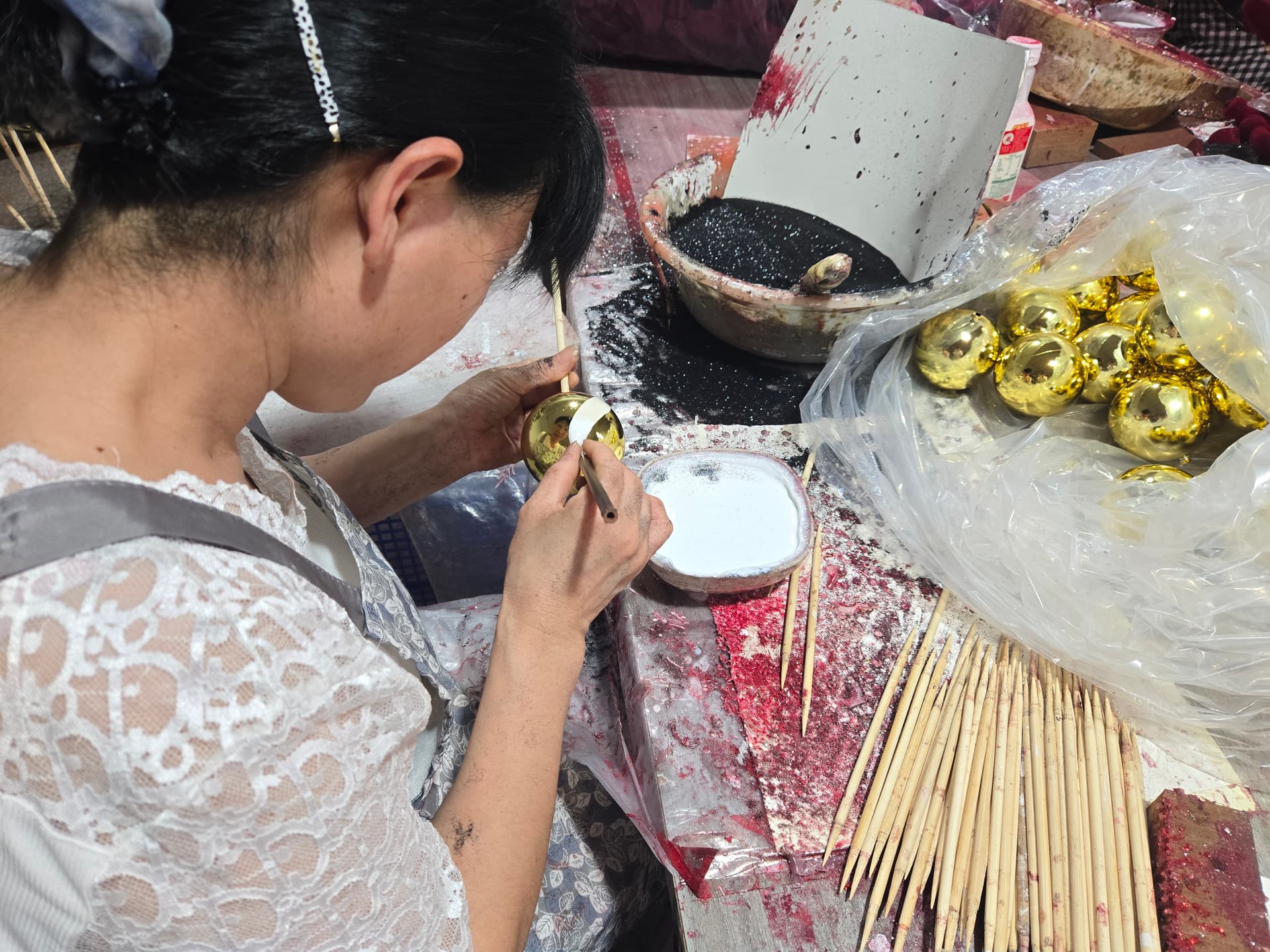
For factory experience, OEM capability, showroom access, and export programs beyond this topic, see our Christmas ornament manufacturer · OEM Christmas ornament development
Request line photos of coating bays, cap assembly, inner-pack fit checks, and pallet staging. A credible Christmas ornament manufacturer publishes MOQ bands per material, sampling windows, and export market experience for North America and Europe.
Shuanglin Crafts runs ball-native programs with documented gates from material intake through FOB release. Review our factory capability tour and wholesale product catalog before issuing an RFQ so your brief maps to real production constraints.
Red flags when sourcing through intermediaries
Trading companies that cannot show coating lot trace, pilot-to-bulk comparison photos, or cap torque records add margin without adding QC. Importers who skip factory verification often discover finish drift at DC receiving when it is too late to re-run photography or adjust planograms.
Ask whether samples came from the same pigment sources and molds as bulk. Insist on pilot lots signed under controlled lighting before you open coating windows for full MOQ.
Verification steps before you commit MOQ
Qualified wholesale programs can arrange virtual line tours and structured pilot lots. Share destination market, set counts, and packaging tier so the export desk scopes verification correctly. request a factory quote
- Review audit-aligned evidence and social compliance tracks your vendor manual lists
- Evaluate pilot lot finish against signed masters—not generic stock samples
- Confirm inner-pack drop fit with your DC spec or third-party QA partner
- Validate carton marks, weight distribution, and pallet photos against forwarder requirements
- Document cap metallization and hang geometry for set-count architecture
MOQ and program economics
Glass finish programs often start at three thousand to five thousand pieces per colorway depending on lustre complexity and cap metallization. Resin shatterproof club lines frequently scale at eight thousand to ten thousand pieces per color with FCL mixed-container efficiency. OEM development process · OEM Christmas ornaments
Set architecture drives economics: six-, twelve-, and twenty-four-count gift boxes change inner-pack tooling and master carton cube differently than bulk export-only programs. Share your color-wall plan early so the factory maps lowest viable lots per SKU.
OEM Christmas ornament development with new molds or retail dielines carries tooling lead times that sit outside standard catalog MOQ—budget ninety to one hundred twenty days to first vessel for new shapes.
Incoterms and freight coordination
FOB port remains the common baseline for US and EU importers who nominate ocean carriers and manage import clearance. The factory stages cartons, prepares commercial invoice and packing list, and releases goods at the named port.
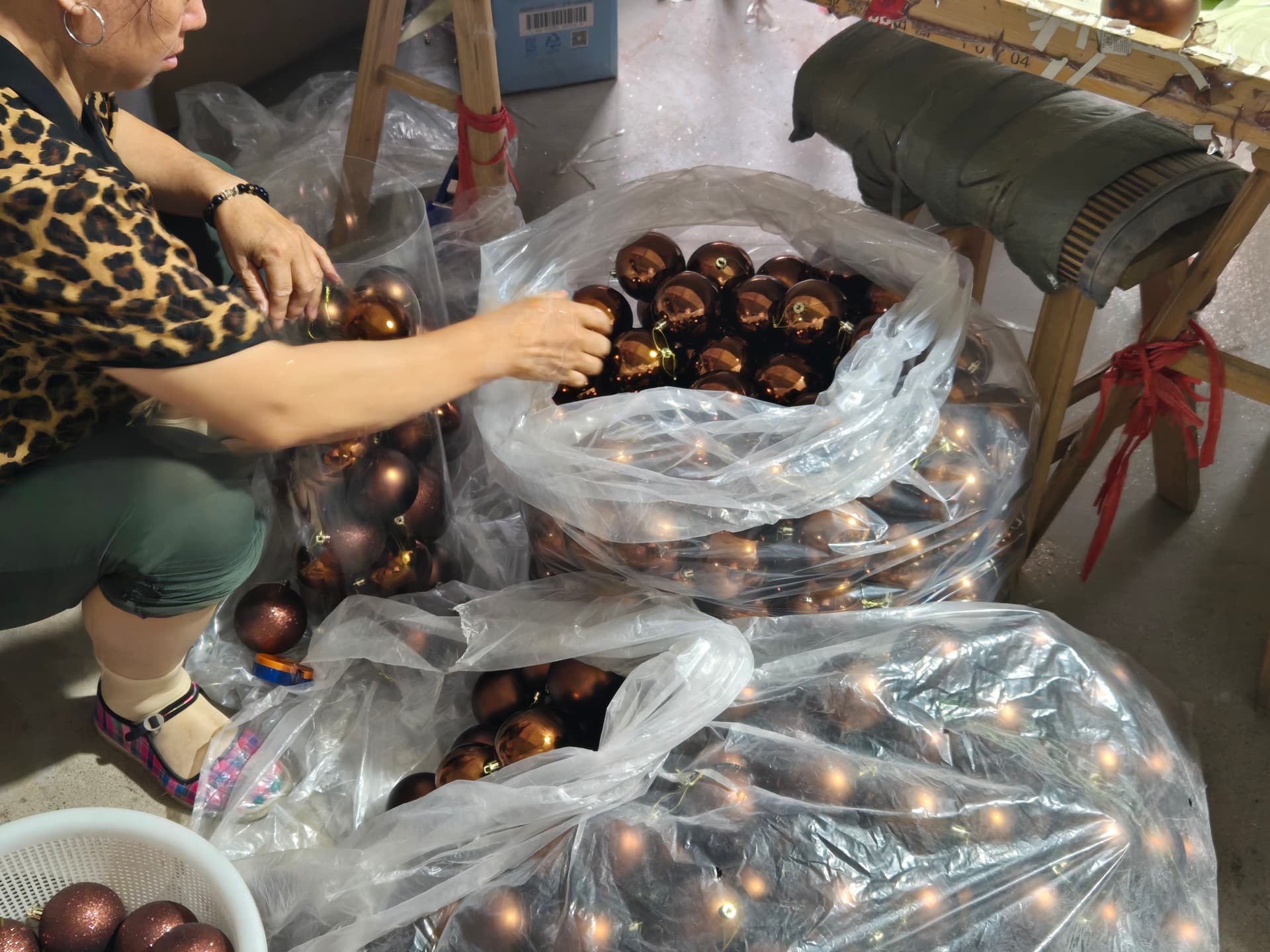
Factory-direct supplier vetting and wholesale sourcing checklists appear on our Christmas ornament supplier · wholesale Christmas ornaments manufacturers
Coordinate moisture management and container loading photos with your forwarder—especially for long trans-Pacific lanes where condensation risk affects coating adhesion on sensitive metallics. Provide GS1 symbology and ship-to marks before bulk inner-pack production opens.
CIF and DDP are available when your team models landed cost holistically; attach forwarder contact early so carton dimensions from retail packaging decisions do not conflict with booking cutoffs.
Compliance and quality evidence
Attach material declarations, coating substance summaries when EU doors require them, and drop-test results when vendor manuals specify impact thresholds. Private-label programs need packaging compliance—barcode symbology, multilingual copy, and recyclability claims—locked at sampling. OEM development process
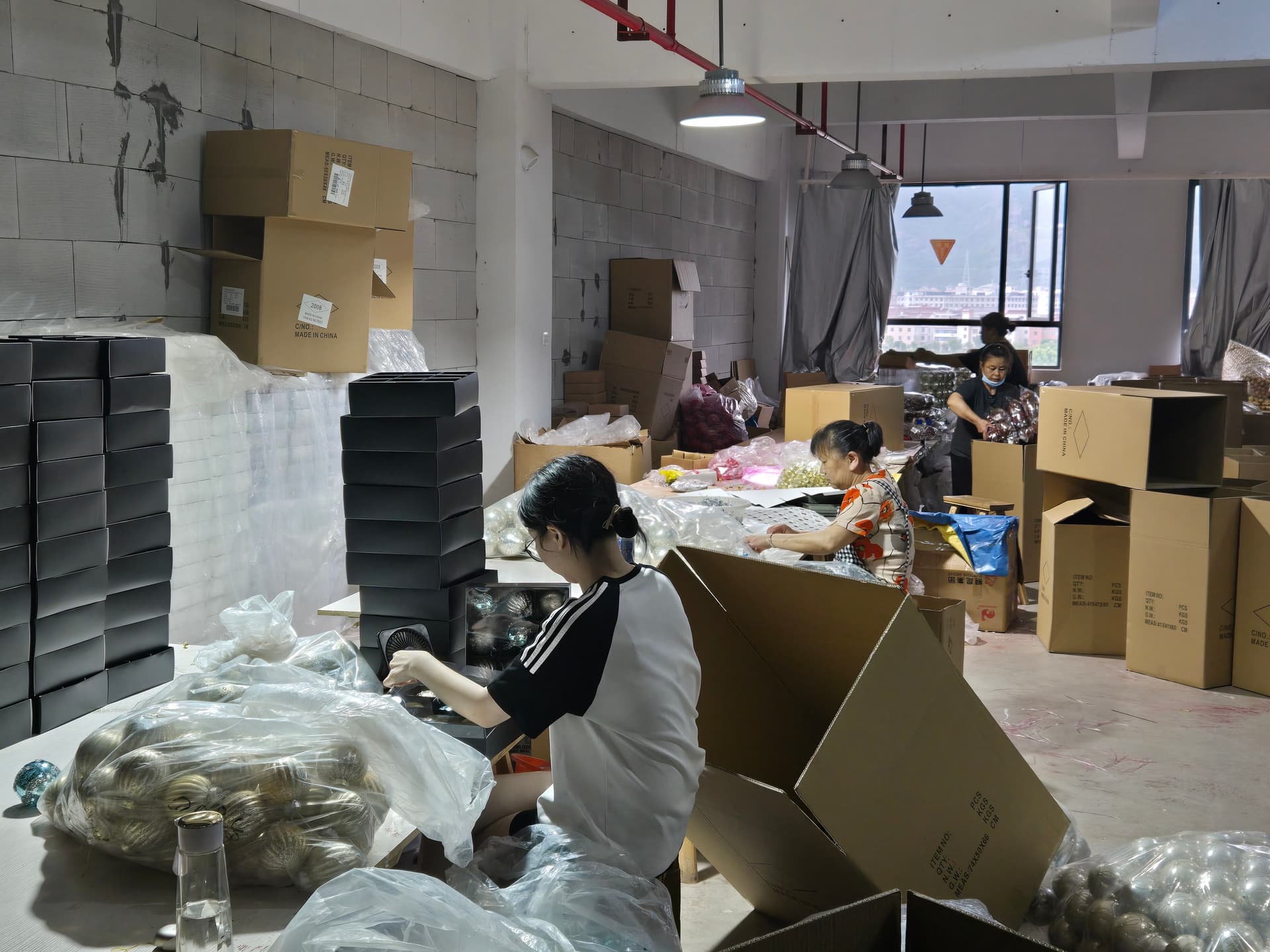
Batch travelers should tie coating lots to master cartons so your QA partner can trace a DC complaint back to production week. OEM private-label ornament programs benefit from structured evidence packages for vendor portal uploads.
Glass and resin platforms may carry different testing expectations: share your full compliance attachment list during RFQ, not after bulk coating begins.
Reverse-engineer the seasonal calendar
Start from in-store reset date and walk backward through DC receiving, ocean transit, export staging, bulk coating, pilot approval, and sampling. North American Q4 retail typically requires bulk release before mid-summer vessel peaks. request a factory quote
New OEM shapes need longer lead than finish changes on approved molds. Repeat seasons on signed platforms may ship in forty-five to sixty days when tooling is already approved.
Submit your target dates with the factory quote form so the export desk flags realistic sampling windows and vessel alignment before you commit seasonal allocation.
Payment milestones and inspection timing
Structure payment milestones around pilot approval and pre-shipment inspection rather than deposit-heavy terms that leave buyers without leverage if bulk finish drifts. Many wholesale programs release balance payment after AQL review and carton mark verification.
Third-party inspection at export staging is worth the fee on first-season private-label containers—it catches inner-pack regressions that line-side spot checks miss when coating bays are running at peak velocity.
Building an import desk workflow
Assign owners on the buyer side for finish approval, packaging dielines, compliance attachments, and forwarder coordination. Ornament programs fail when merchandising approves color stories while import desks discover MOQ or vessel misalignment weeks later.
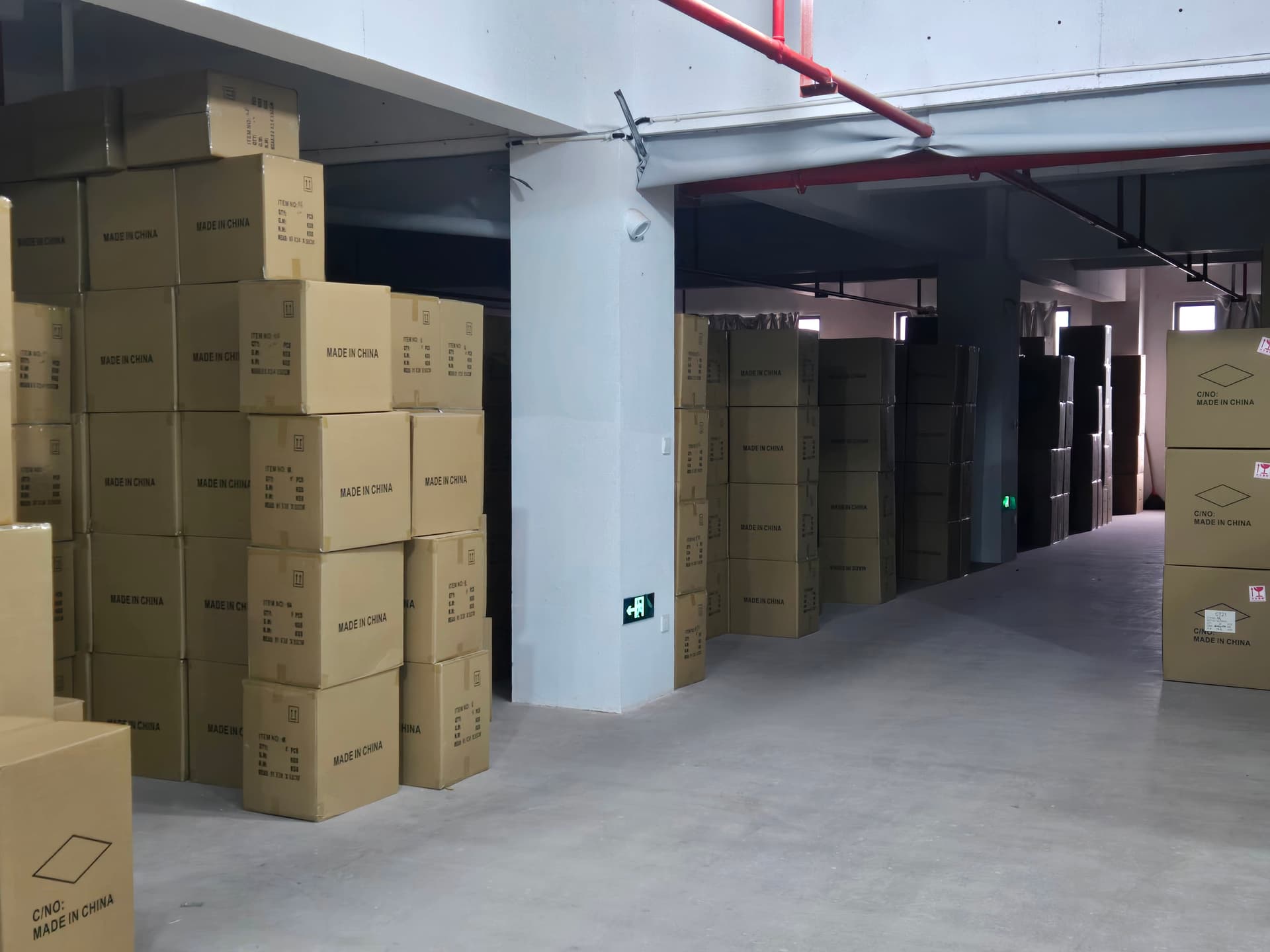
Maintain a living RFQ packet: size ladder, set counts, material preference, packaging tier, destination market, Incoterm, target in-store date, and compliance checklist. Factories quote faster and more accurately when briefs are complete.
Archive pilot photos, signed masters, and inner-pack IDs in your PIM or vendor portal so repeat seasons reference approved platforms instead of restarting development from catalog samples.
Common import risks and how to mitigate them
Run this risk list against your supplier checklist before MOQ commit. Pair mitigation steps with named factory gates so accountability is clear if issues surface at DC receiving. B2B sourcing blog
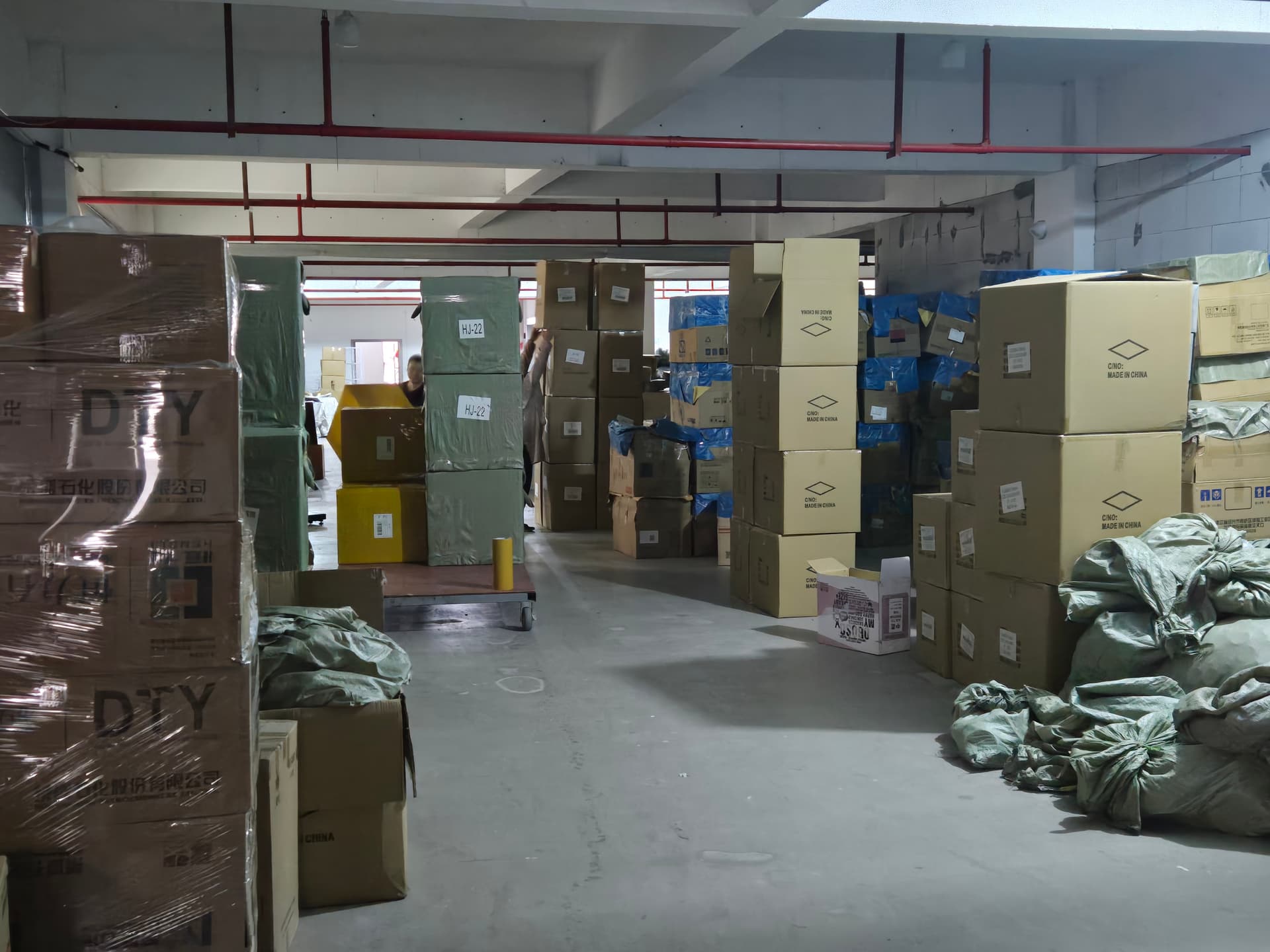
Wholesale MOQ bands, production capacity, channel economics, and FCL planning for seasonal programs are on our wholesale Christmas ornaments · wholesale Christmas ornaments manufacturers
Import insurance and cargo clauses should name ornament programs explicitly when high-value luxury gift sets ride in the same container as volume resin—underwriters and claims adjusters handle spherical fragile goods differently than flat décor cartons.
- Finish drift between pilot and bulk—mitigate with signed masters and coating lot trace
- Carton crush at pallet strapping—mitigate with corner protection specs and pre-vessel photos
- Barcode or copy errors on retail boxes—mitigate with proof cycles before bulk print
- Vessel slips during peak season—mitigate with early booking and realistic bulk windows
- Mixed-container partition downgrade—mitigate with SKU-level inner-pack documentation
Next steps with Shuanglin Crafts
Ready to scope a program? Request a factory quote with your assortment ladder and vessel dates, get our product catalog for finish families and MOQ bands, or send OEM requirements if you need custom caps, packaging, or private-label tooling. Request a factory quote · Get product catalog · Send OEM requirements
You can also review our production setup on the factory page or message the export team through contact when you need lead times confirmed before allocation. Factory tour · Contact export desk
Frequently asked questions
What Incoterm do US importers typically use for Christmas ornaments?
FOB port is the most common baseline with buyer-nominated ocean booking. CIF and DDP are available when coordinated with your forwarder and import broker on landed-cost modeling.
How do I verify a Christmas ornament factory in China?
Request audit-aligned evidence, pilot lot results under controlled lighting, inner-pack drop photos, and pallet staging images—not catalog photography or showroom-only samples.
When should import desks book seasonal ornament capacity?
Lock sampling in Q1–Q2 and bulk coating windows before mid-summer vessel peaks for North American Q4 retail. Reverse-engineer from your in-store reset date.
Do I need separate factories for glass and shatterproof lines?
Focused ball-ornament manufacturers often run glass and resin platforms under one palette document—useful for mixed color-wall programs with unified QC packets.
What documents should accompany the first container?
Commercial invoice, packing list, carton marks aligned to GS1 when required, material declarations, batch travelers, and photos of inner packs and pallet wrap.